
State of Commercial Electrification – 2026 Outlook


The commercial electrification market is entering 2026 in transition. Regulatory frameworks are being rewritten. Federal incentives are under review. OEMs face uncertainty about which compliance standards will govern their products.
2026 will be a year of clarification; some applications will prove economically viable now while others will see longer transformation and adoption timelines. The companies that succeed will be those which build strategies around fundamental market drivers, such as cost, quality, performance, and customer experience, rather than attempting to perpetually adapt to ever-changing regulatory mandates.
Here's what we see ahead.
American Manufacturing Becomes the Competitive Advantage

Domestic content requirements for federally funded infrastructure and electrification efforts, such as Build America Buy America, are in full swing, with long-standing waivers like EPA’s Clean Ports BABA Waiver and FTA’s BEV Mini-Bus Buy America Waiver) either soon to expire or under review.
The Administration’s expectations for onshoring and domestic manufacturing are stark, and there’s no reason to expect that programs like BABA and Buy America won’t be expanded to reflect this approach.
Thinking ahead to how this will play out in the market, this isn’t just a compliance checkbox. It represents a fundamental market shift towards genuine American manufacturing.
Billions of federal funding opportunities now require domestic content compliance, and thus a more thoughtful approach to supplier sourcing. Fleet operators pursuing federal dollars must prove their battery suppliers can meet these requirements
This creates a clear advantage for domestic manufacturers with established domestic manufacturing operations, localized supply chains, and the documentation to meet BABA and Buy America requirements, both today and into the future, should become even more stringent than in the market environment.
AI Data Centers Create New Demand for Commercial Battery Technology
A convergence is emerging between power-hungry AI infrastructure and electric vehicle battery markets. Data center battery storage has evolved beyond backup power into grid-interactive energy assets designed to maximize data-center uptime and minimize peak load events for utility companies. In light of the softening EV market, battery cell manufacturers have begun to retool, and in some cases expand, production lines in the US to support these applications, and make use of what would otherwise be idle capacity. While cell formats and chemistries used for these applications are somewhat different than what is used in vehicle batteries, the fundamental manufacturing operations processes are the same, which allows battery cell manufacturers to utilize their installed capacity.
Total Cost of Ownership Becomes the Primary Decision Driver
The conversation around commercial electrification is shifting from "if" to "how much" and "how fast." As technology matures and real-world performance data accumulates, fleet managers are moving beyond range anxiety to focus on the bottom line.
For commercial fleets with predictable routes, high daily mileage, and centralized charging, the TCO equation increasingly favors electric. In 2026, we expect TCO calculators, not only sustainability commitments, to drive the majority of fleet electrification decisions.
Regulatory Uncertainty Creates Market Volatility - But Also Opportunity
The regulatory landscape for commercial electrification is anything but certain. EPA waivers have been revoked for California's Advanced Clean Trucks and NOx Omnibus standards, federal EV tax credits have been eliminated, EPA’s GHG Phase 3 standard for medium- and heavy-duty vehicles will likely be revised, and the 2009 Greenhouse Gas Endangerment Finding is under review. California and its Section 177 partner-states have launched legal challenges against the EPA and broader U.S. government.
To say the least, fleet operators face genuine uncertainty about which standards will apply for model year 2027 and beyond.
Yet despite this turbulence, commercial electrification continues because the underlying economics are becoming increasingly compelling, independent of mandates.
For forward-thinking fleet operators and battery suppliers, regulatory uncertainty creates opportunity. Companies that develop genuine cost advantages and proven performance will capture market share as competitors wait for clarity that may never fully arrive. Success in 2026 will come from building business cases that work with or without subsidies.
Off-Highway and Industrial Applications Lead Practical Electrification
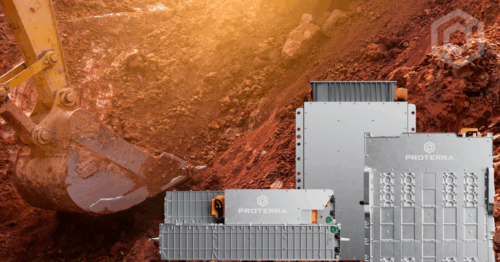
While the headlines of 2024 and 2025 tended to focus on long-haul trucks, the most compelling commercial electrification story in 2026 is happening off-highway. Construction equipment, mining machinery, specialty equipment and agricultural vehicles represent applications where battery electric technology delivers immediate, measurable advantages.
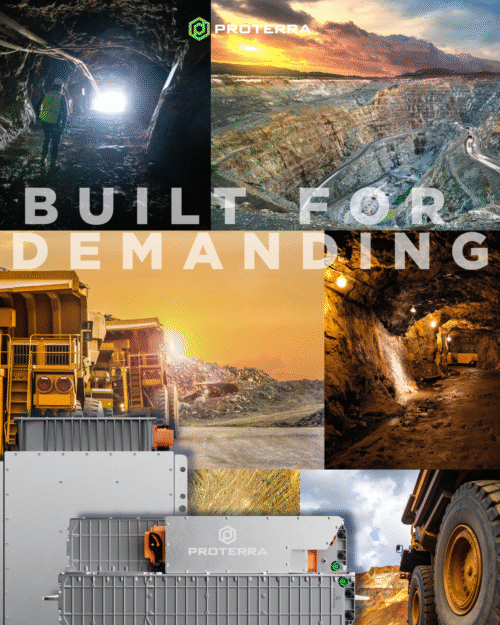
Underground mining represents the clearest case: diesel exhaust creates ventilation costs that can consume 30-35% of operating expenses. Electric mining equipment eliminates those costs while improving worker safety.
Construction applications follow a similar pattern. Mini excavators and compact wheel loaders benefit from zero emissions (enabling indoor operation), dramatically lower noise (critical for residential areas), and simplified maintenance.
Volvo Construction and Komatsu have launched electric compact equipment lines, with adoption accelerating in European markets.
The pattern is clear: electrification succeeds first where it solves specific operational challenges beyond emissions reduction. In 2026, these off-highway segments will demonstrate profitability and performance that paves the way for broader commercial adoption.
The Path Forward

The commercial and industrial electrification market in 2026 is more complex than projected even two years ago. But complexity creates opportunities for those manufacturers capable of adjusting and adapting, while improving business fundamentals. This is the year where OEMs, battery suppliers, and fleet operators can focus on solving a broader range of application challenges in meaningful, sustainable and cost-effective ways.
The path to electrification is in identifying genuine cost or operational advantages in specific applications, building proven solutions for demanding use cases, and creating business models that survive policy volatility.
For companies willing to focus on these tangible opportunities rather than waiting for regulatory mandates to force broader adoption, 2026 offers a clearer path forward than the market has seen in years. The work of building economically sustainable electrification begins.
Power Your Vehicle or Equipment
Stay up to speed as we power the future of electrification
Get company updates, new product announcements, and essential industry news delivered straight to your inbox.