
The Electric Mining Equipment Race Is Already Underway

Mining electrification is an operational imperative driven by economics. Underground mines spend 30-50% of their total energy consumption and substantial capital investments on complex ventilation systems primarily designed to evacuate diesel exhaust fumes. A single 150-tonne haul truck consumes over $850,000 in diesel annually, while its electric equivalent cuts energy costs by 65%. With battery-electric equipment now proven across more than 53 mines worldwide, OEMs who aren't developing electric product lines risk losing ground to competitors who've already captured major contracts.
Technology has matured. In 2024, 30% of new underground loaders sold globally were battery-electric. Mining companies aren't waiting for perfect solutions, they're signing contracts now because electric equipment delivers measurable operational advantages today.
Ventilation Economics Make the Math Undeniable
The single most compelling financial argument for underground mine electrification isn't about carbon, it's about airflow. Diesel equipment mandates massive ventilation requirements: MSHA regulations require 100 CFM per brake horsepower for diesel equipment. Electric equipment slashes these requirements by 60-75%. Electric motors produce roughly one-third the heat of diesel engines performing equivalent work, and they generate zero exhaust gases requiring dilution.
For a 3,000 tonnes-per-day underground mine, Queen's University and Goldcorp research documented potential annual savings of $5.6 million from ventilation-related costs alone. This includes reduced main and auxiliary fan power, decreased heating requirements, and avoided development costs for ventilation infrastructure. A single new ventilation raise can cost $200-300 million in capital—expenditure that mines with electrified equipment can offset.
Performance Advantages Drive Adoption Beyond Cost Savings
Battery-electric mining equipment doesn't just match diesel performance, it exceeds it in critical operational metrics. Electric motors deliver 100% torque at zero RPM, enabling 40% faster acceleration during loaded starts compared to diesel engines that must build torque through their power band. Independent mine studies have documented productivity improvements ranging from 42-64% in tonnes-kilometers moved, with electric trucks climbing steep grades 25% faster than diesel equivalents while carrying equivalent loads.
Electric drivetrains achieve approximately 95% efficiency versus 35-45% for diesel engines. Combined with regenerative braking that captures energy during downhill travel, operations with balanced haul profiles achieve near-zero net energy consumption on certain cycles. Underground operations gain an additional advantage: electric motors maintain full power at depth where diesel engines lose performance in oxygen-depleted air.
Equipment Across Categories Is Production-Ready
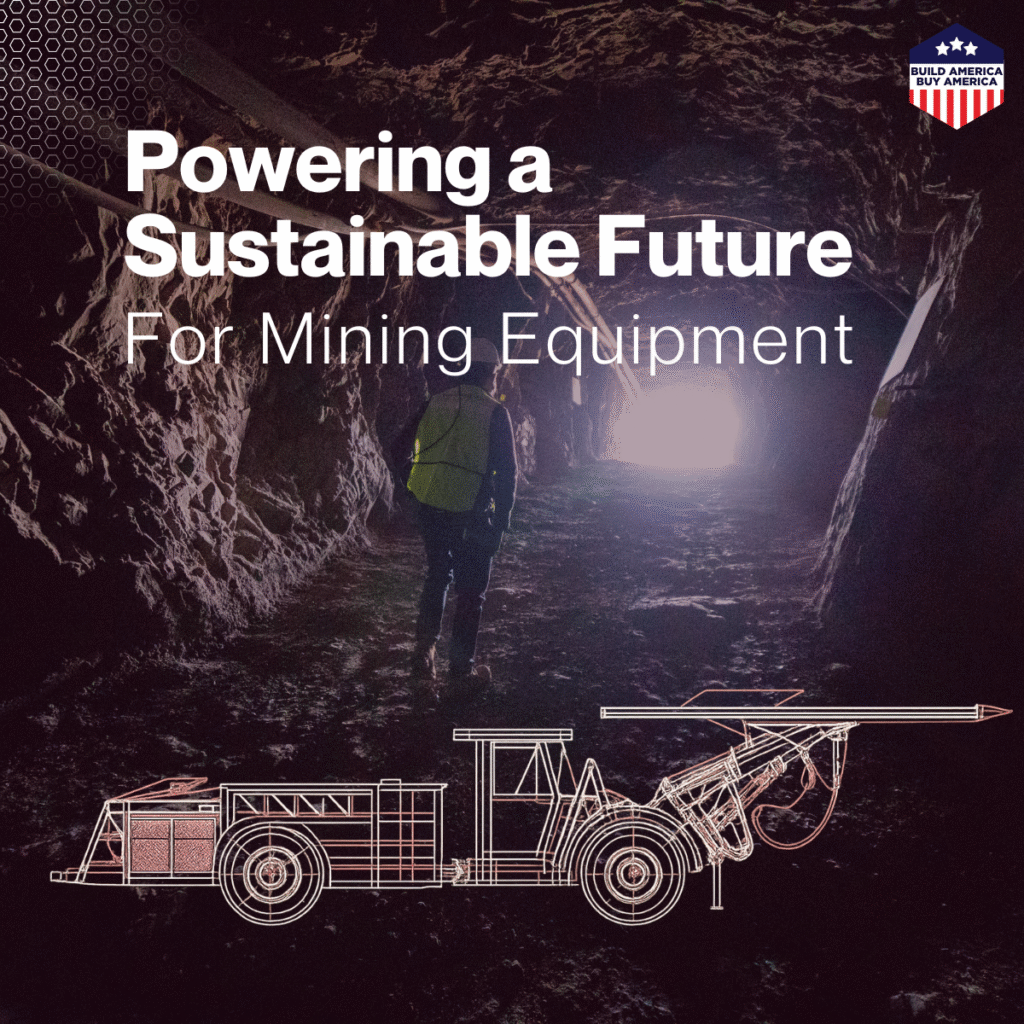
The technology maturity question has been answered. Commercial battery-electric equipment is now available across virtually every underground mining category. Load-haul-dump loaders from 4 to 18 tonnes, underground trucks from 42 to 65 tonnes, drill rigs, bolters, and support equipment have all electrified with multiple OEM offerings in each category.
Surface equipment is progressing toward commercialization with multiple ultra-class haul trucks in field trials with major mining companies. First commercial deployments are targeted for 2026-2027, with several OEMs offering power-agnostic platforms that enable modular transition from diesel to battery electric. The remaining technical challenges center on battery capacity for the largest surface trucks rather than fundamental drivetrain viability.
Market Demand Signals Have Never Been Stronger
The electric mining equipment market reached approximately $3 billion in 2024, growing at 15-20% CAGR, three times faster than the overall mining equipment market. Battery-powered surface trucks tripled from 129 to 387 units between 2024 and 2025. Underground electric loaders increased from 269 to 293, while underground trucks rose from 69 to 89.
Contract values signal where procurement budgets are heading. Individual equipment partnerships have reached $2.8 billion for hundreds of machines. Mining companies have committed hundreds of millions toward fleet electrification over five-year horizons. Industry consortiums involving 20+ major mining companies are standardizing charging infrastructure and interoperability requirements, signaling demand for commoditized electric equipment rather than proprietary solutions.
Deployed equipment is delivering on operational promises. All-electric underground operations report 50% ventilation reductions and have eliminated millions of liters in annual diesel consumption while improving productivity metrics. Mines running mixed electric-diesel fleets report electric equipment achieving higher reliability and availability than diesel counterparts.
Powering the Shift
Put simply, the business case for electric mining equipment rests on operational fundamentals. Ventilation savings of $3-5 million annually for medium-sized underground mines, 65% energy cost reductions for haul trucks, 30-40% maintenance savings, and documented productivity improvements up to 42% create compelling economics that mining companies are acting on today. OEMs developing electric product lines aren't responding to regulatory pressure, they're responding to procurement signals from customers signing large procurement contracts. The question isn't whether mining will electrify, but which equipment manufacturers will capture the fastest-growing segment of the mining equipment market.
Ready to Electrify your Equipment?
Stay up to speed as we power the future of electrification
Get company updates, new product announcements, and essential industry news delivered straight to your inbox.