
FAQs on Commercial Vehicle Electrification

This FAQ answers the basic questions about electrifying commercial vehicles including the vocabulary and concepts that apply industry-wide, not just to Proterra specifically.
-
What does "electrification" mean for commercial vehicles?
Electrification is the process of replacing a vehicle's diesel or gasoline engine with an electric motor powered by a battery. For commercial fleets, that means trucks, buses, and equipment that run on stored electricity instead of fuel. Electrification is cutting tailpipe emissions and optimizing how a vehicle is fueled, maintained, and driven.
For a commercial vehicle, electrification touches more than the engine:
- The engine and fuel tank are replaced by an electric motor and a battery pack.
- Charging replaces fueling so the vehicle plugs in instead of stopping at a pump.
- Maintenance changes too: electric drivetrains have far fewer moving parts than a diesel engine, so there's less routine wear-and-tear service.
- Some vehicles are fully electric (battery-only), while others use a hybrid setup that pairs a smaller engine with a battery.Fleets typically electrify in stages starting with routes or duty cycles that match a designed range and charging window, then expanding as infrastructure and vehicle options grow.
-
What is a battery-electric vehicle (BEV)?
A BEV runs entirely on electricity stored in an onboard battery, with no engine, fuel tank, or tailpipe. It's charged by plugging into an external power source rather than refueling.
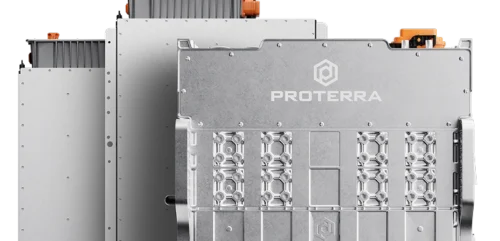
- The battery pack stores energy the way a fuel tank stores diesel — measured in kilowatt-hours (kWh) instead of gallons.
- An electric motor converts that stored energy into motion; there's no engine, traditional transmission, or exhaust system.
- BEVs produce zero tailpipe emissions, since there's no combustion happening onboard.
- In commercial use, BEVs are increasingly common in transit buses, delivery trucks, refuse trucks, and off-road equipment, where predictable routes make battery range and charging easier to plan around. -
What's the difference between BEV, Hybrid & Fuel Cell?
A battery-electric vehicle (BEV) runs entirely on stored electricity, with no combustion engine. A hybrid pairs a smaller engine with a battery, using electric power part of the time and fuel the rest. A fuel cell vehicle generates its own electricity onboard from hydrogen instead of storing it in a battery.
-
Why are companies electrifying their fleets?
Fleets electrify to cut fuel and maintenance costs, reduce emissions, and meet company or regulatory sustainability goals, all while giving drivers a quieter, lower-vibration ride. Every fleet's reasons are different, since duty cycles, routes, and cost goals vary by application. To hear how real fleets are approaching electrification, listen to our recent webinar, Powered to Perform. (https://proterra.com/webinar/powered-to-perform-real-world-benefits-of-going-electric/)
-
How far can a BEV travel on a full charge?
Range varies by vehicle, battery size, and duty cycle. Typically this can range anywhere from under 100 to beyond several hundred miles for a variety of commercial applications.
-
What is a kilowatt-hour (kWh), and why does it matter for commercial vehicles?
A kilowatt-hour (kWh) is a unit of energy, equal to one kilowatt of power used for one hour. For electric commercial vehicles, kWh describes how much energy a battery pack can store, much like gallons describe how much fuel a tank holds. A bigger battery, measured in kWh, generally means more range.
-
What is battery capacity?
Battery capacity is the total amount of energy a battery pack can store, expressed in kWh. It sets the upper limit on how far a vehicle can travel before recharging, though actual range also depends on weight, terrain, and driving conditions. Capacity is one of the main factors fleets weigh when specifying a vehicle, since a larger pack extends range but can also add weight and cost. Battery capacity also depreciates over time, which is why packs are designed with some buffer and will be backed by a defined warranty.
-
How does kWh relate to charging time?
A bigger battery (more kWh) generally takes longer to charge at a given power level, unless it's paired with a faster charger. Charging time comes down to a simple relationship: the battery's capacity in kWh divided by the charger's power output in kW. A 200 kWh battery charging on a 50 kW charger takes roughly four hours, while the same battery on a 150 kW charger takes closer to ninety minutes. That's why fleets often pair larger battery packs with higher-powered charging equipment, so vehicles with more range don't also end up spending more time plugged in.
-
What is range in an electric commercial vehicle?
Range is the distance a commercial electric vehicle can travel on a single full charge. It's determined mainly by battery size, measured in kWh, and how much energy the vehicle uses per mile, which shifts with weight, terrain, weather, and driving style. Range isn't fixed: a delivery route with frequent stops uses energy differently than highway driving, and cold weather or heavy loads typically reduce it further, since more energy goes toward heating or hauling. "Range anxiety," the worry about running out of charge, is one of the top concerns fleets raise before switching, which is why route analysis matters upfront. Fleets typically match a vehicle's range to its route before electrifying, so the battery comfortably covers a shift with a buffer built in.
-
How does weather affect electric vehicle range?
Cold temperatures reduce range because more battery energy goes toward heating the cabin and keeping the battery itself within its optimal operating temperature. Batteries simply perform less efficiently when cold, so in freezing conditions a fleet might see a drop in usable range compared to a mild day. Hot weather can have an effect too, though usually a smaller one, since cabin and battery cooling systems draw on the same energy supply. Fleets operating in extreme climates often account for this by specifying larger battery packs, adjusting routes seasonally, or building in an opportunity charging buffer.
-
How do fleets decide if a route is a good fit for electrification?
Fleets typically analyze daily mileage, stops, terrain, and available charging time, matching a vehicle's range and charge window to the route.
-
What are the different levels of EV charging?
EV charging is grouped into three levels: Level 1 (standard outlet, slowest), Level 2 (240-volt, common for depot charging), and DC fast charging (highest power, used to recharge quickly between routes). Commercial fleets typically rely on Level 2 or DC fast charging.
- Level 1 uses a standard 120-volt outlet and adds only a few miles of range per hour, too slow for most commercial use.
- Level 2 uses a 240-volt connection, similar to a home dryer outlet, and is the most common choice for overnight depot charging.
- DC fast charging delivers much higher power directly to the battery, cutting charging time to under an hour in many cases, useful for fleets that need to charge between shifts or routes.
- The right charging level depends on how much time a vehicle has to charge and how much range it needs before its next route. -
What is depot charging?
Depot charging means vehicles charge at a central facility, usually overnight, rather than at public stations, which is the most common setup for commercial fleets.
-
Do commercial vehicles need special charging infrastructure?
Yes, most fleets install dedicated charging equipment and often need electrical infrastructure upgrades at their depot to support Level 2 or DC fast charging. For fleets with continuous routes, like transit systems, overnight depot charging typically covers most of the day's energy needs, while "opportunity charging" tops off the battery during natural gaps in service, such as a short layover at the end of a route. Opportunity charging often uses an overhead pantograph connector that automatically aligns above the vehicle, delivering a fast, high-power charge in just a few minutes without pulling the vehicle out of service. Combining depot charging with opportunity charging lets some fleets run smaller, lighter battery packs on the same routes, since the battery gets topped up throughout the day rather than relying on a single large overnight charge.
Stay up to speed as we power the future of electrification
Get company updates, new product announcements, and essential industry news delivered straight to your inbox.