

Supply Chain Resilience

Now a Competitive Advantage
Over the last thirty years, the prevailing approach of global trade and supply chain management has been least-cost optimization, responding to the political forces that have pushed for deregulation, reduced trade barriers, and free trade agreements. This strategy, while highly effective in cost mitigation, assumed that the status quo of global trade would be maintained.
We live in a new era.
Geopolitical volatility and protectionist trade policies have unseated decades of supply chain complacency. Meanwhile, shifting federal procurement requirements, increasing domestic content standards, and growing end-customer pressure have pushed supply chain sourcing from a procurement footnote to a program-level decision. And the bar keeps rising.
A Battery Pack Is More Than Its Cell
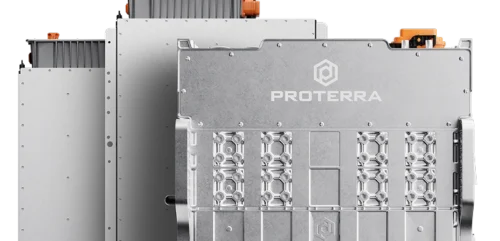
One of the most persistent misconceptions in battery sourcing is that domestic content is primarily a cell question – the truth is, there’s much more to a battery pack than just the cell that powers it. A battery pack is a complex system of not only cells, but also internal components including, thermal management components, battery management systems, structural enclosures, wiring, and connectors – and of course the embedded software that interfaces between these components and the vehicle or equipment it powers. Each of those layers carries its own sourcing geography and supply risk. A supplier can check a domestic content box at the pack level while carrying significant offshore exposure across the bill of materials, presenting potential compliance challenges, increased costs through changing trade policy, risks to tax credits, and more. That exposure doesn’t disappear after a sale – it persists, at a time when OEMs simply cannot afford to take on supplier risk or instability.
True resilience means understanding where your suppliers are sourced across the entire stack. Are they actively working to reduce exposure risk at every tier of their supply chain? Or just the final assembly layer that faces regulatory scrutiny?
Minimal Compliance Leads to Fragility
For years, meeting domestic content thresholds felt like a static target; something you qualified for once and maintained with minimal effort. That’s no longer the case. Federal procurement frameworks are tightening; with Build America Buy America (BABA) content thresholds rising to 75% starting in CY2029. For OEMs pursuing federally funded contracts, meeting Buy America and BABA requirements is shifting from a one-off exercise to a much more robust and involved compliance effort that risks becoming more challenging in the years to come.
End-market customers are also raising their own requirements, and the geopolitical environment has made supply chain traceability and component origins a live business risk rather than a compliance formality.
OEMs built on suppliers who are optimized for compliance minimums are now finding themselves exposed as requirements evolve. Meeting yesterday’s threshold doesn’t guarantee you’ll meet tomorrow’s requirement. The costs of unpreparedness – at best, requalifying suppliers mid-program, and at worst, losing a contract or even funding over domestic content – is far higher than building the right foundation from the start.
The Right Questions to Ask Your Battery Supplier
The OEMs that are getting this right are asking the tough questions earlier in the program development cycle: Where are major pack subcomponents sourced, and what happens if that region is disrupted? Can suppliers document domestic content across the full bill of materials, not just at the pack level assembly? What components and critical minerals are traceable back to foreign entities of concern? Are suppliers working to onshore and nearshore components proactively, or waiting for a regulatory mandate to force the issue? What does their supply chain geography look like two or three product generations from now?
These aren’t just procurement questions. They’re strategic ones. The battery supplier you choose today becomes part of your compliance story, your program risk profile, and your ability to compete for public-sector contracts for years to come.
What Leading Looks Like
The battery suppliers positioned to win long-term are making proactive strategic investments across the full pack. This means not only onshoring and nearshoring one layer of the supply chain, but systematically reducing offshore exposure across all components, subcomponents, and subsystems. They’re doing this work before being asked, because they’re building their products requirements proactively – where the market is going, not where it is today.
That’s the strategy that Proterra has been executing. We are actively investing across the full pack supply chain to increase American content, reduce geographic concentration, and give our OEM partners the continuity, compliance confidence, and supply chain peace of mind needed to build successful, robust, long-term programs. We recently announced a significant milestone in that effort.
Read our latest press release to learn more about how Proterra is building a resilient, U.S.-anchored supply chain: https://proterra.com/news-and-press/proterra-announces-u-s-cell-supply-option-for-onyx-battery-platform/
Stay up to speed as we power the future of electrification
Get company updates, new product announcements, and essential industry news delivered straight to your inbox.